SAROS [Review]
SAROS is one of the best action games I've ever played, with amazing bosses, great enemy variety and breathtaking movement. Still, it overcorrected some choices from Returnal; it can be a bit easy and doesn't really tell a good story.
![SAROS [Review]](https://storage.ghost.io/c/99/4e/994ec29e-38c9-4a86-87eb-e15f426ddf35/content/images/size/w1200/2026/05/SAROS_20260507232723.jpg)
Matching a ridiculously fast and relentless bullet hell to great movement in 3D is maybe the hardest thing for any action game to do. SAROS is the (spiritual) follow up to my favorite of this kind, Returnal. So, for me, it had big shoes to fill. One of my most anticipated releases of the year, I'm actually happy to say that for almost everything that it does, SAROS is phenomenal. Let me tell why I felt that way.
It is really noticeable how every playable aspect and system of this game is really well thought out. The movement is fantastic and absurdly responsive, while still considering momentum, like a 3D Platformer where everything fast falls. While it can be pretty vertical and haptic, it was never floaty, and the precision is unmatched.
Everything on Arjun's movement is player driven. A press on L1 makes him dash, but the amount of time I kept it pressed actually changes the distance and it can be surprisingly reflective of what I intended. The same happens with jumps that can vary from the shortest hop imaginable to very big leaps. The only thing that I didn't like is that I couldn't dash in the air while "super" sprinting, but it is a minor nuisance.
Arjun Devraj is sent on a mission issued by the Soltari Corporation to the planet of Carcosa. It is a colonizing mission, and his ship is the fourth to be sent there. The previous expeditions sums up to thousand of colonizers, but still, the planet seems barren, empty and somewhat hostile on arrival, for the surprise of everyone in the crew.
I quickly discovered that Arjun had some other plans beyond a good paycheck. Someone he knows, a woman named Nitya, was in the first expedition, and Arjun quickly shows that reaching her may be more relevant to him than uncovering the mysteries behind the missing personnel.
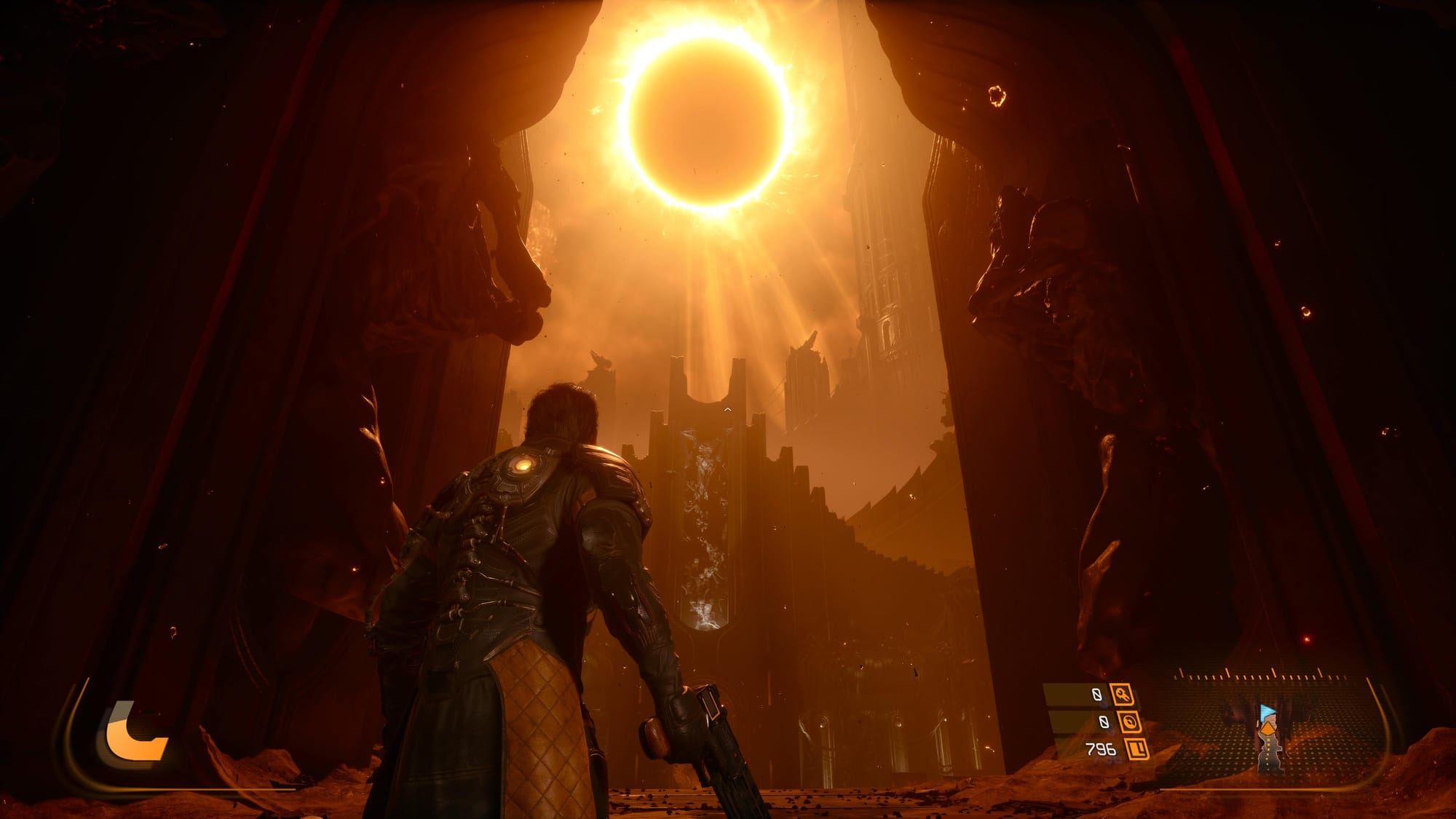
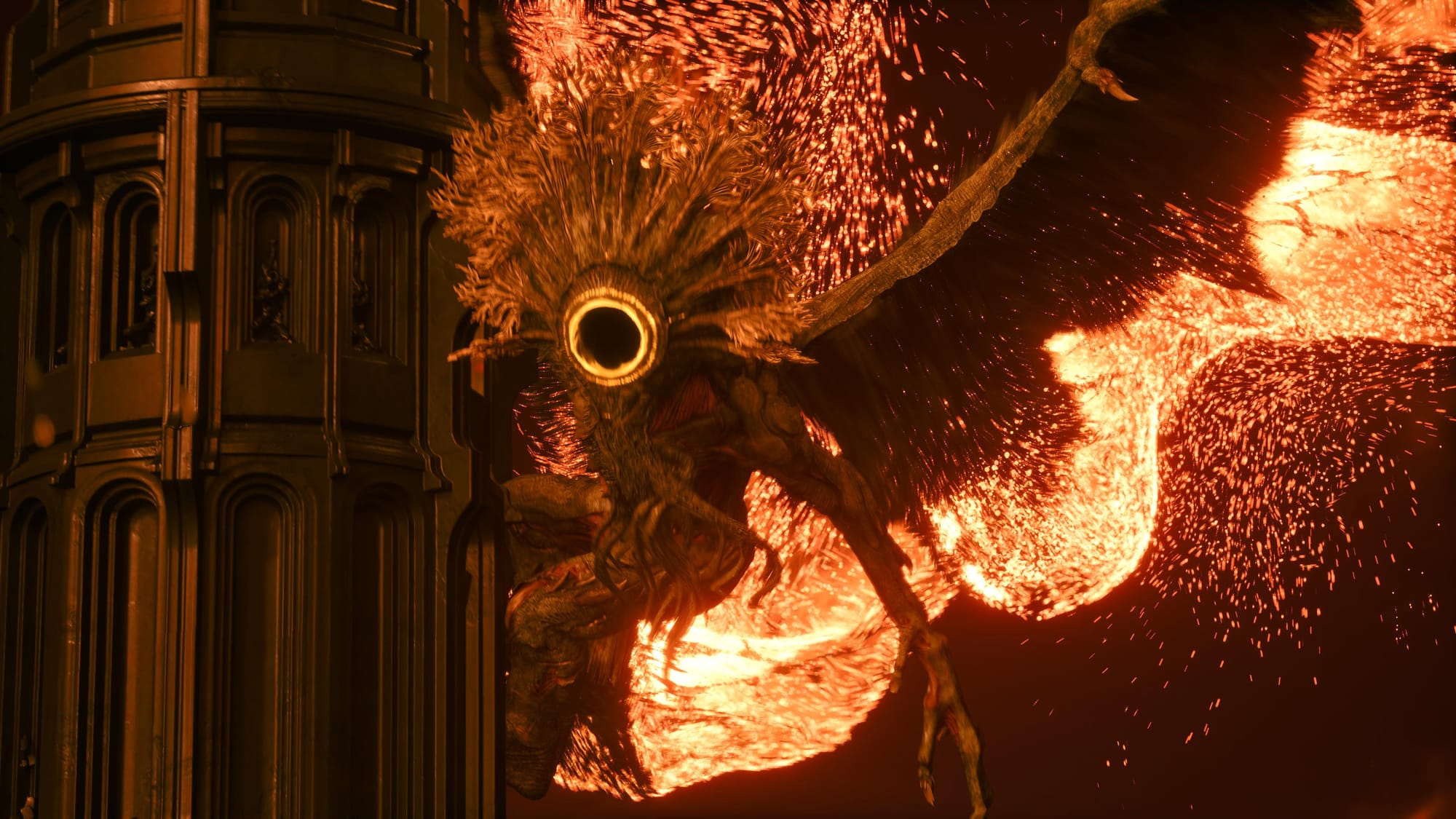
This game's developer HOUSEMARQUE made it clear that one of the goals for SAROS was to have a clearer and more understandable story when compared to Returnal and I don't really know if I can say that they achieved that. Of course that the overall intentions of the characters are easy to understand, but as the game goes, trying to differentiate what is real from what is not can be too confusing and obtuse.
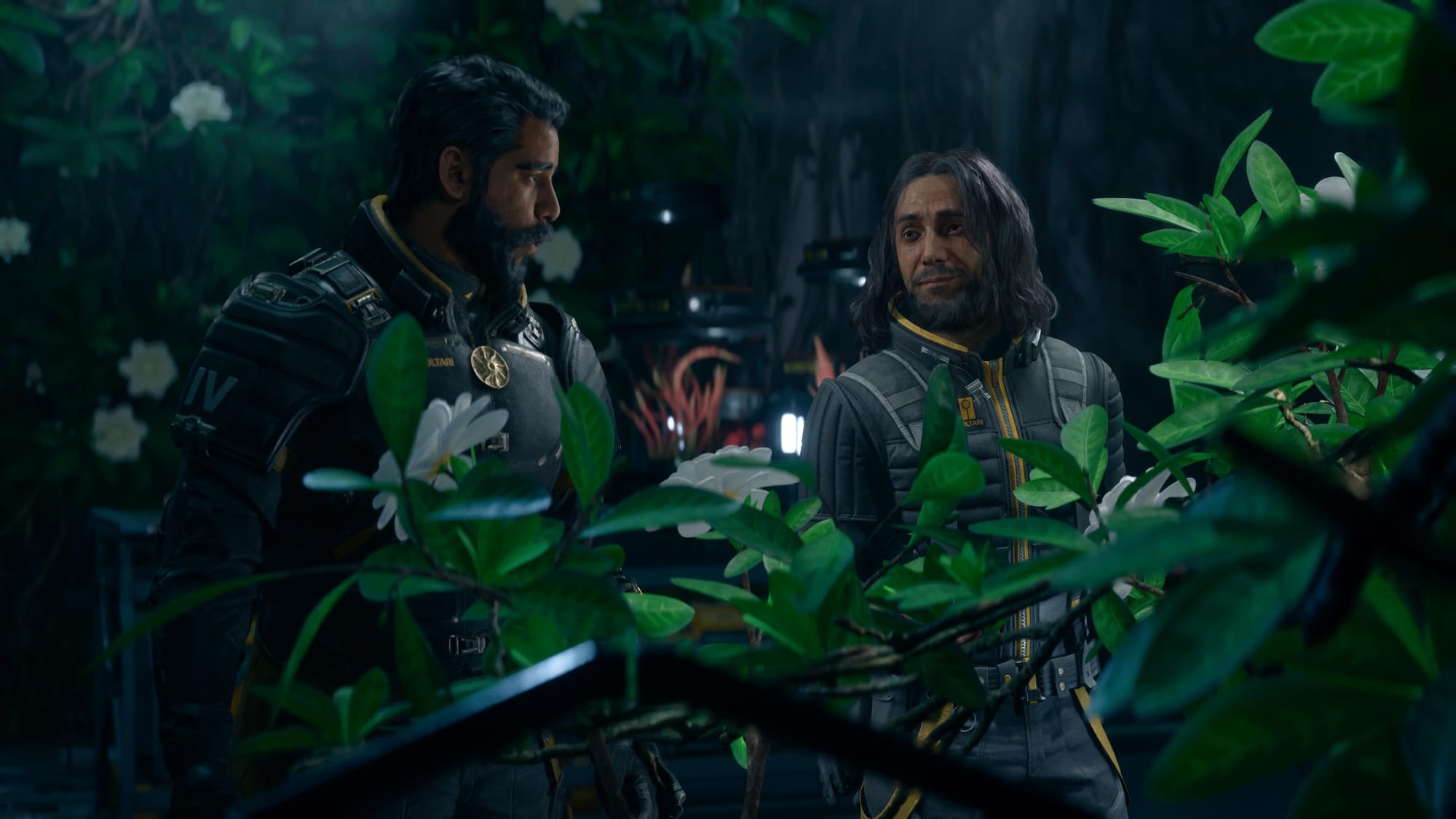
They've decided to tell the story with a lot of mysterious exposition rather than actually showing what happened, and it didn't particularly work to make the story more enjoyable, added to the fact that the facial animations aren't still quite there outside the big cutscenes. Everyone but Arjun felt rushed, and the characters that were more interesting other than him, Sebastian and Nitya in my opinion, weren't as flashed out to be really great. Just good.
But let's be honest: SAROS main course is its action. And for the most time, it works so, so well. Although there aren't that many weapon archetypes, each of the five of them have very different modifiers that can range from auto-targeting and automatic guns to more technical, manual and precise ones. HOUSEMARQUE created a game that finds every niche of third person shooting, and every option is good, so I could focus on what I liked most and I was rewarded for my investment on it.
I particularly wouldn't really say that this is a roguelike, but more of an extraction shooter, honestly. The currency that I can get in each run can be returned with no penalty when going back alive to the base, and while dying can reduce the amount earned, there are run-specific upgrades that can mitigate that.
During the exploration, weapons and artifacts can be found behind some optional pathways or hidden places of the stage. Not choosing them can also be a choice, since some artifacts can have some bad side effects that can affect not only attributes, but movement and shooting as well.
The stages are very similar between each runs, so I could actually get acquainted to most of the areas without much issue. Sometimes the order of rooms can be shuffled, but they are mostly the same rooms every run, so the world actually feels more consistent and easy to predict than one would assume at the beginning of the game.
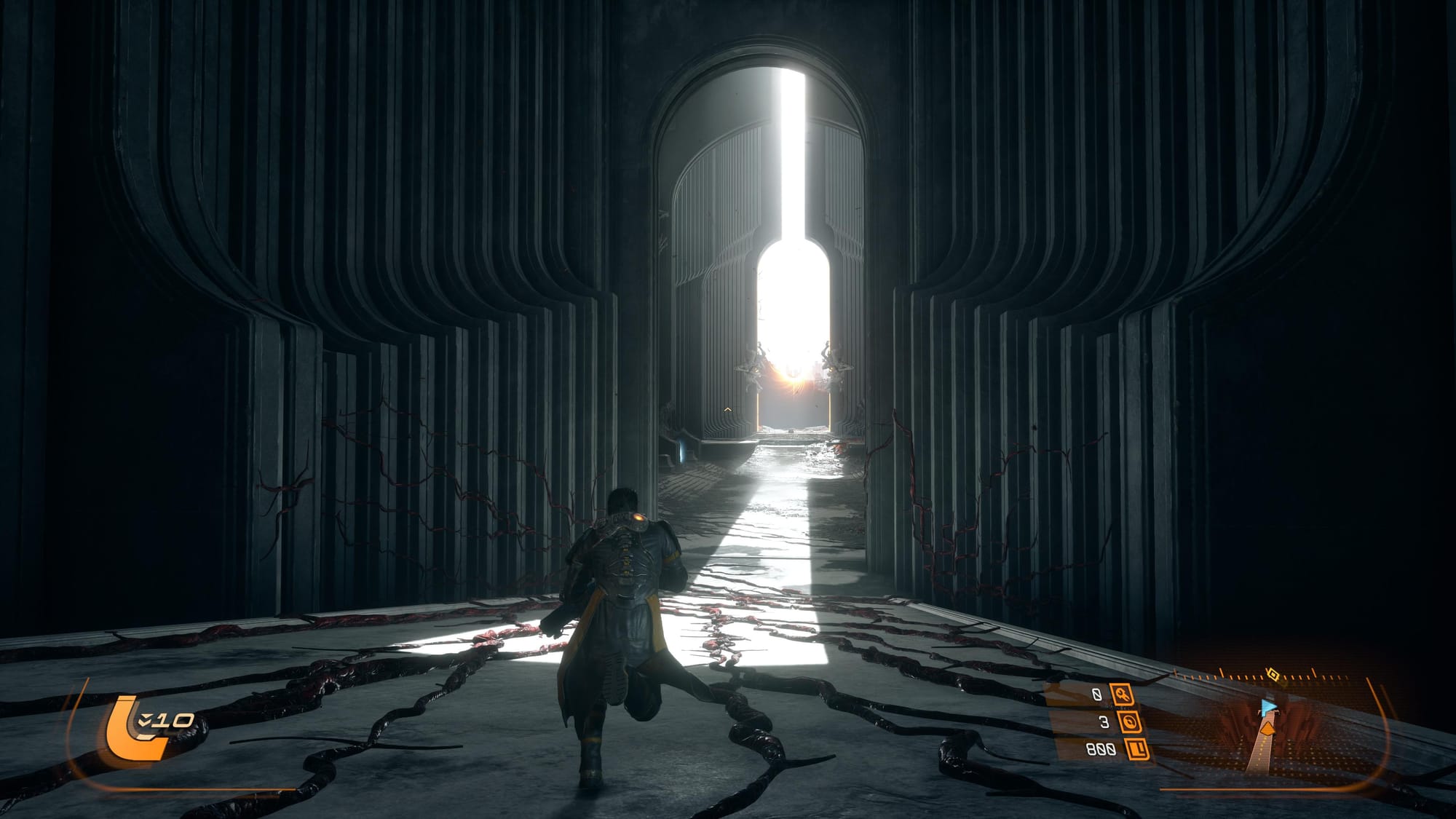
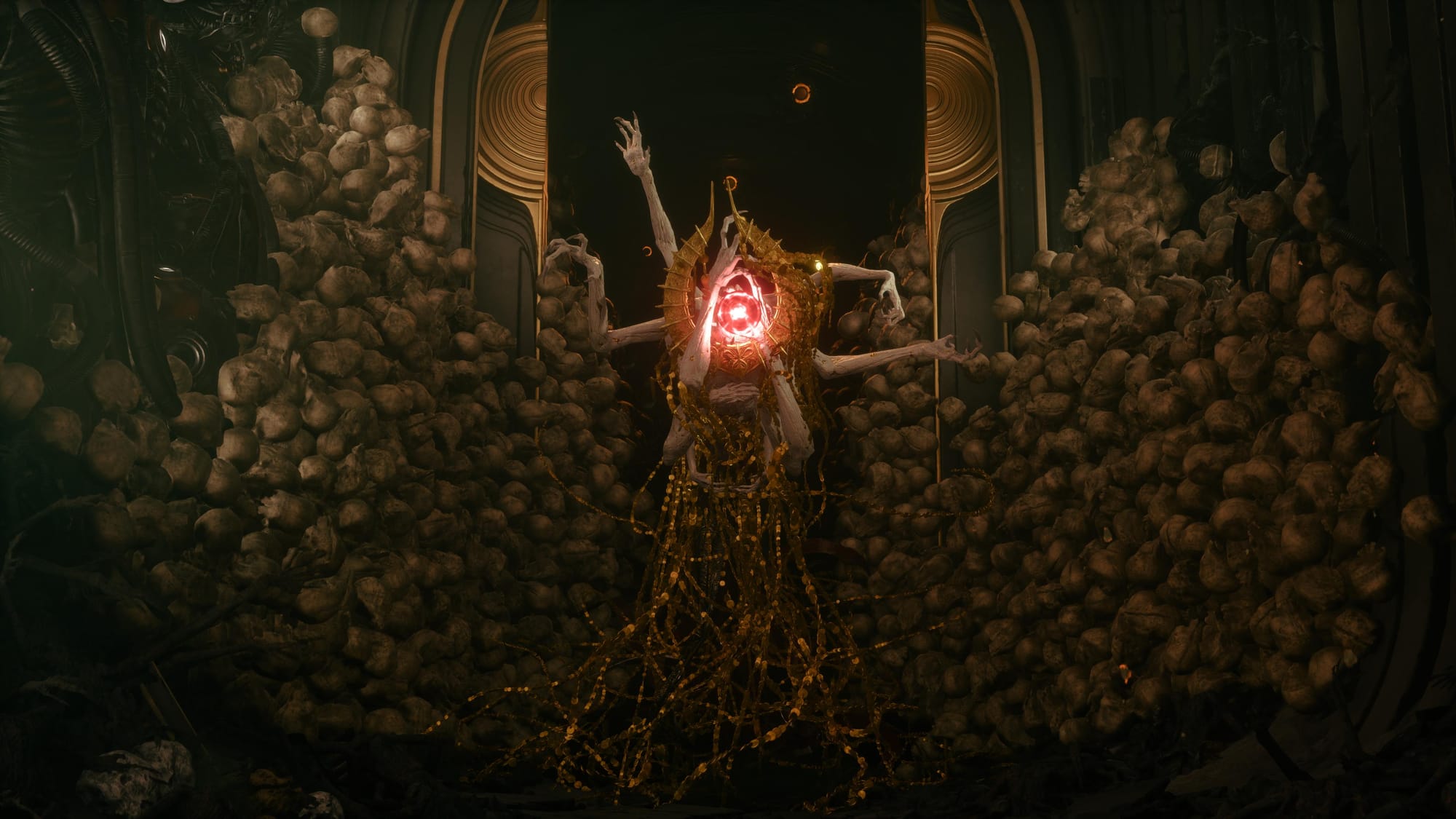

Every weapon has two styles of shooting, and holding the left trigger (L2) on different positions is the way to swap between modes. Making the triggers have functions depending on how much I press them not only elevates SAROS gunplay, but it is what defines it as something easy to pick up. So easy to shoot while moving. Dodging, shooting and adjusting the camera is accessible because of this control scheme. To be perfect I'd just add gyro aiming, but I digress, what is here works very well.
Each biome has its own distinct structure and enemy roster, and this great variety was something that I liked a lot. In every stage, there are moments where an eclipse can be performed. Sometimes these eclipses are mandatory, and what they do is basically make every enemy stronger and their projectiles able to reduce Arjun's maximum health. The thing is: SAROS is not that difficult, and the eclipse mechanic was not enough to really make things hard.
There's a challenge to have here, and people that are not that used to bullet hells or haven't played Returnal may have a harder time with the game. But there were moments that some weapons basically played the game for me, mostly the crossbows, that can make hard encounters be as fast as some quick seconds.
Beyond the two shooting modes, other strong projectiles are the overdrives, basically a special move that is not always accessible but pretty much clears every enemy it touches, and a special shot that uses "power" and is accessible by fully pressing the left trigger (L2). I didn't really like all of these special shots, and I only wanted to find the same one, and it was frustrating to do a run where I couldn't find it.
All the money that Arjun gathers throughout the runs can be exchanged for progression with a definitely not evil corporate terminal, and these permanent upgrades are not only for Arjun's power and life, but also for his weapons initial levels and other goodies that can make the exploration even easier.
In SAROS, grinding is possible if someone is on a particular roadblock, and while that can be interesting, the lengthy runs to gather money can feel tiresome if done more then once, to be honest.
Something that surprised me is that beyond all of this fast movement, there's also a pretty good shield that can – and sometimes, must – be used to deal with enemies. The shield can absorb enemy projectiles to charge power for the special shot, so using it is more offensive than defensive.
Also, to activate the shield, a melee hit needs to be done, making the shield a more aggressive option than dashing. By the halfway through the game, the shield can even parry red projectiles if pressed at the right time. It is a very satisfying parry.
SAROS is one of the best action games I've ever played, with amazing bosses, great enemy variety and breathtaking movement. Still, it overcorrected some choices from Returnal; it can be a bit easy and doesn't really tell a good story.
9/10
![Urban Myth Dissolution Center [Review]](https://storage.ghost.io/c/99/4e/994ec29e-38c9-4a86-87eb-e15f426ddf35/content/images/size/w720/2026/04/IMG_6683.jpeg)
![Pragmata [Review]](https://storage.ghost.io/c/99/4e/994ec29e-38c9-4a86-87eb-e15f426ddf35/content/images/size/w720/2026/04/PRAGMATA_CAPA.jpg)
![Crimson Desert [Review]](https://storage.ghost.io/c/99/4e/994ec29e-38c9-4a86-87eb-e15f426ddf35/content/images/size/w720/2026/04/Crimson-Desert_20260416182431.jpg)
Comments ()